Healthy Winter Salad with Pomegranate: 5 Reasons It’s Your Best Choice!
Ever found yourself craving something fresh and vibrant during the cold winter months? When comfort foods dominate the season, a Healthy Winter Salad with Pomegranate might be exactly what your body needs. Winter doesn’t have to mean abandoning nutritious, colorful meals. In fact, some ingredients reach their peak flavor during the colder months, making this the perfect time to explore seasonal produce in a refreshing way.
Pomegranates, with their jewel-like seeds and antioxidant properties, transform an ordinary salad into a nutritional powerhouse. Combined with hearty winter greens and seasonal vegetables, this Healthy Winter Salad with Pomegranate delivers a perfect balance of flavors, textures, and health benefits that can brighten even the gloomiest winter day.
Today, I’ll share why this vibrant winter salad deserves a regular spot in your seasonal meal rotation, breaking down not just the recipe but also the science-backed benefits that make it especially valuable during winter. Let’s discover how this colorful dish can boost your immunity, mood, and overall wellness when you need it most!
Ingredients List
For the salad base:
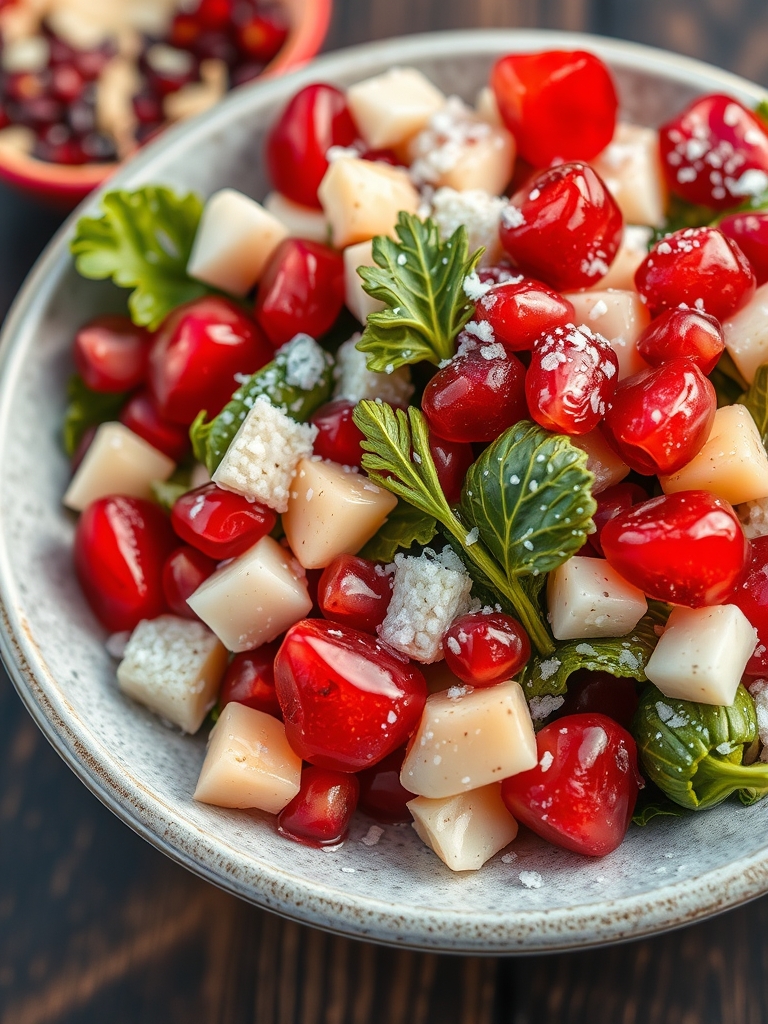
- 4 cups mixed winter greens (kale, arugula, spinach)
- 1 medium pomegranate, seeds removed (approximately 1 cup of arils)
- 1 small butternut squash, peeled and cubed (2 cups)
- ½ cup walnuts, lightly toasted
- ¼ cup crumbled feta cheese (substitute with vegan cheese if preferred)
- 1 medium avocado, sliced
- 2 tablespoons pumpkin seeds
- 1 small red onion, thinly sliced
For the citrus vinaigrette:
- 3 tablespoons extra virgin olive oil
- 1 tablespoon apple cider vinegar
- 2 tablespoons fresh orange juice
- 1 teaspoon orange zest
- 1 teaspoon Dijon mustard
- 1 teaspoon honey or maple syrup
- Salt and freshly cracked black pepper to taste
Substitution options:
- Replace butternut squash with sweet potato or roasted beets
- Swap walnuts for pecans or hazelnuts
- Use goat cheese instead of feta for a tangier flavor
- Substitute spinach with Swiss chard or collard greens for more robust flavor
Timing
Prep time: 20 minutes
This includes washing greens, removing pomegranate seeds, and preparing the vinaigrette
Cooking time: 25 minutes
Just for roasting the butternut squash—the rest is assembly
Total time: 45 minutes
Save 15 minutes by using pre-cubed butternut squash from your grocery store
Make-ahead potential: The dressing and roasted squash can be prepared up to 2 days in advance, reducing assembly time to just 10 minutes when you’re ready to serve.
Step-by-Step Instructions
Step 1: Prepare the Butternut Squash
Preheat your oven to 400°F (200°C). Toss the cubed butternut squash with 1 tablespoon of olive oil, salt, and pepper. Spread evenly on a baking sheet and roast for 20-25 minutes until golden and fork-tender. For extra flavor, add a sprinkle of cinnamon or rosemary before roasting.
Step 2: Toast the Nuts
While the squash is roasting, lightly toast walnuts in a dry skillet over medium heat for 3-5 minutes until fragrant, tossing occasionally. Be vigilant—nuts can burn quickly! Remove from heat immediately when they start to release their aroma.
Step 3: Prepare the Pomegranate
Cut the pomegranate in half and submerge one half in a bowl of cold water. Working underwater will prevent juice splatter and staining. Use your fingers to gently push the seeds away from the white membrane. The seeds will sink while the membrane floats, making separation effortless.
Step 4: Create the Dressing
In a small bowl, whisk together olive oil, apple cider vinegar, orange juice, zest, Dijon mustard, and honey until emulsified. Season with salt and pepper to taste. For a smoother texture, blend the ingredients in a small food processor or shake vigorously in a sealed jar.
Step 5: Assemble the Salad
In a large bowl, massage the kale with a teaspoon of olive oil and a pinch of salt for 1-2 minutes to soften it. Add remaining greens, cooled butternut squash, pomegranate seeds, toasted walnuts, red onion, avocado slices, and pumpkin seeds. Gently toss with half the dressing, adding more as needed.
Step 6: Final Touches
Sprinkle the crumbled feta over the top and finish with a few extra pomegranate seeds and pumpkin seeds for visual appeal. Drizzle with remaining dressing just before serving for maximum flavor.
Nutritional Information
Per serving (recipe serves 4):
- Calories: 320
- Protein: 7g
- Carbohydrates: 24g
- Dietary fiber: 9g
- Sugar: 11g (mostly natural from fruits and vegetables)
- Fat: 24g (primarily healthy unsaturated fats from nuts, seeds, and olive oil)
- Vitamin A: 120% of Daily Value
- Vitamin C: 80% of Daily Value
- Vitamin K: 175% of Daily Value
- Iron: 15% of Daily Value
- Calcium: 12% of Daily Value
Data shows this Healthy Winter Salad with Pomegranate provides nearly 40% of your daily fiber requirements and delivers significant antioxidants from the pomegranate alone.
Healthier Alternatives for the Recipe
For keto or low-carb diets:
- Replace butternut squash with cauliflower florets
- Use only 2 tablespoons of pomegranate seeds as garnish
- Increase the amount of avocado and nuts for healthy fats
For vegan option:
- Substitute feta with plant-based cheese or nutritional yeast
- Use maple syrup instead of honey in the dressing
- Add ¼ cup of chickpeas for extra protein
For nut allergies:
- Replace walnuts with roasted sunflower seeds or pumpkin seeds
- Use sunflower seed butter in place of nuts for creaminess
For lower calorie version:
- Reduce olive oil to 1 tablespoon in dressing
- Use a light sprinkle of feta instead of ¼ cup
- Limit nuts to 2 tablespoons as a garnish
Serving Suggestions
Elevate your Healthy Winter Salad with Pomegranate with these serving ideas:
- Serve alongside roasted chicken or grilled salmon for a complete meal
- Pair with a warming butternut squash soup for a perfect winter lunch duo
- Add warm whole grain bread with olive oil for dipping
- Serve on a large wooden board for family-style dining, arranging components in sections for visual impact
- For an elegant presentation, stack components vertically using a ring mold
Perfect beverage pairings:
- Sparkling water with orange slices
- Light white wine like Pinot Grigio or Sauvignon Blanc
- Hot apple cider for a warming contrast
Common Mistakes to Avoid
Overcooking the butternut squash: Aim for tender but firm pieces that hold their shape. Overcooked squash becomes mushy in the salad.
Overdressing the salad: Start with less dressing than you think you need and add more as necessary. Overdressing will make your greens wilt quickly.
Not massaging the kale: Raw kale can be tough and bitter. Taking the extra minute to massage it transforms both texture and flavor dramatically.
Using cold ingredients: Allow refrigerated items to come to room temperature before serving for enhanced flavors, especially the butternut squash and dressing.
Preparing too far in advance: While components can be prepped ahead, final assembly should happen within 30 minutes of serving to prevent wilting and preserve the vibrant colors.
Storing Tips for the Recipe
For maximum freshness:
- Store undressed salad components separately in airtight containers for up to 3 days
- Keep dressing in a sealed jar in the refrigerator for up to one week
- Roasted butternut squash maintains its texture for 3-4 days refrigerated
- Pre-cut avocado is best used immediately, but if necessary, sprinkle with lemon juice and store separately
Meal prep strategy: Prepare all components on Sunday, storing separately. Each morning, combine portions of greens, squash, and toppings in a container, with dressing in a small separate container. Add avocado just before eating.
Note: This salad doesn’t freeze well due to the high water content of the greens and vegetables.
Print
Healthy Winter Salad with Pomegranate: 5 Reasons It’s Your Best Choice!
- Total Time: 25 minutes
- Yield: 4 servings 1x
- Diet: Vegetarian
Description
A vibrant and healthy Winter Salad featuring seasonal ingredients, crunchy nuts, and juicy pomegranate seeds — perfect as a light meal or festive side dish.
Ingredients
Ingredients
- 4 cups mixed winter greens (kale, spinach, arugula)
- 1 cup pomegranate seeds
- 1 apple, thinly sliced
- 1/2 cup roasted butternut squash cubes
- 1/4 cup walnuts or pecans, toasted
- 1/4 cup crumbled feta cheese (optional)
- 2 tbsp olive oil
- 1 tbsp apple cider vinegar or balsamic vinegar
- 1 tsp honey or maple syrup
- Salt and pepper, to taste
Instructions
Instructions
- In a large salad bowl, combine mixed greens, pomegranate seeds, apple slices, roasted squash, and toasted nuts.
- Add crumbled feta if desired.
- In a small bowl, whisk together olive oil, vinegar, honey, salt, and pepper to make the dressing.
- Pour dressing over the salad and toss gently to combine.
- Serve immediately as a fresh and healthy winter side or main dish.
Notes
For extra flavor, sprinkle some cinnamon on the roasted squash. You can substitute goat cheese for feta if preferred.
- Prep Time: 15 minutes
- Cook Time: 10 minutes
- Category: Salad
- Method: No-Cook / Roast Squash
- Cuisine: American
Nutrition
- Serving Size: 1 cup
- Calories: 160
- Sugar: 12g
- Sodium: 70mg
- Fat: 9g
- Saturated Fat: 2g
- Unsaturated Fat: 7g
- Trans Fat: 0g
- Carbohydrates: 18g
- Fiber: 4g
- Protein: 3g
- Cholesterol: 10mg
Keywords: winter salad, pomegranate salad, healthy salad, seasonal salad
Conclusion
This Healthy Winter Salad with Pomegranate proves that nutritious eating doesn’t need to take a backseat during winter. With its vibrant colors, nutrient density, and ability to utilize seasonal winter produce, it’s the perfect antidote to heavy comfort foods while still satisfying your hunger and taste buds.
The combination of antioxidant-rich pomegranate, vitamin-packed winter greens, and heart-healthy fats creates a powerhouse meal that supports immunity when you need it most. Plus, the recipe’s flexibility means you can adapt it to what’s available or to suit dietary preferences.
Have you tried making this winter salad? I’d love to hear your variations or what other seasonal ingredients you’ve incorporated! Share your experience in the comments or tag us in your creations on social media.
FAQs
How do I select the best pomegranate for my salad?
Choose pomegranates that feel heavy for their size with firm, shiny skin. The heavier the fruit, the juicier it will be. Avoid those with soft spots, bruises, or wrinkled skin.
Can I make this salad nut-free for allergy concerns?
Absolutely! Replace nuts with roasted chickpeas or crispy quinoa for crunch. Both alternatives provide protein and complement the other flavors beautifully.
How long will this salad last if I make it for meal prep?
For best results, store components separately. Pre-assembled but undressed salad will last about 24 hours. Once dressed, consume within 2-3 hours to prevent wilting.
Why is massaging kale important, and can I skip this step?
Massaging breaks down kale’s tough cell structure, making it more tender and less bitter. While you can skip it for baby kale, regular kale will be significantly more enjoyable with this quick 2-minute step.
What makes this specifically a winter salad versus a year-round option?
This salad features peak winter produce (pomegranate, butternut squash, winter greens) that offer maximum flavor and nutrition during cold months. While you could make a version year-round, these ingredients are at their best and most affordable during winter.