Table of Contents
Choosing the Right Crockpot Size for Your Needs
Choosing the right Crockpot size makes cooking easier and more efficient. A Crockpot should be big enough to cook the meals you need without wasting energy or space. Knowing how many people you usually cook for and what kinds of dishes you make helps find the best size.
Different sizes fit different needs. Small Crockpots work well for singles or couples, while larger ones suit families or those who cook in bulk. Thinking about how often someone entertains guests or wants leftovers can also guide the choice.
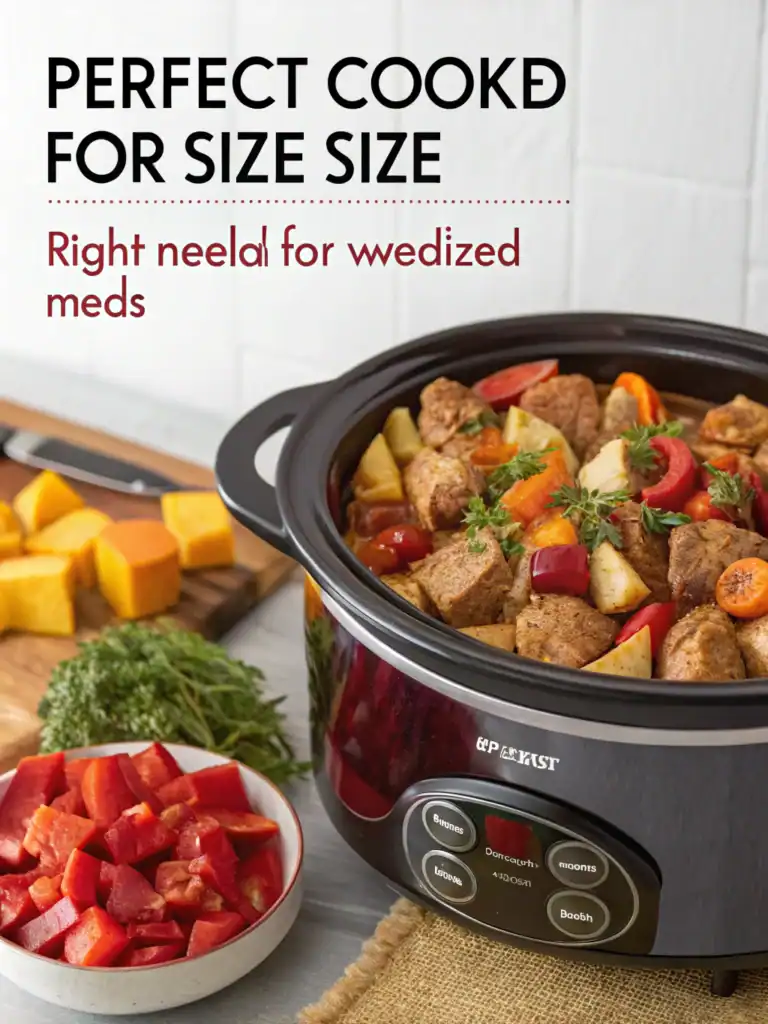
Storage space and kitchen size are important too. A Crockpot should fit comfortably without making the kitchen crowded. Picking the right size saves time, energy, and money while making meals enjoyable.
Key Takeaways
- Choose a size that fits the usual number of servings needed.
- Consider meal types and how often leftovers are desired.
- Ensure the Crockpot fits well in the available kitchen space.
Understanding Crockpot Sizes
Crockpots come in various sizes to fit different cooking needs. Knowing the capacity, the size categories, and how volume matches servings helps buyers choose the best fit for their household and cooking style.
Common Crockpot Capacities
Crockpots usually range from 1.5 to 8 quarts. Smaller models, about 1.5 to 3 quarts, work well for individuals or couples. Medium sizes, around 4 to 6 quarts, suit small families or those who like leftovers. Large crockpots, from 6 to 8 quarts or more, are best for bigger families or cooking for groups.
Capacity affects what recipes can be made. For example, a 7-quart crockpot handles large cuts of meat or full meals with sides. The size affects cooking time and energy use, so picking the right capacity reduces waste and improves results.
Differences Between Small, Medium, and Large Models
Small crockpots are compact and easy to store. They are ideal for simple meals and small portions but may not be suitable for batch cooking. Medium crockpots balance size and versatility, handling most recipes comfortably.
Large models can prepare meals for six or more people but take more counter space and use more energy. They allow cooking bigger quantities, which suits meal prepping or entertaining.
Choosing between these sizes depends on kitchen space, household size, and cooking frequency. Small models save space, medium work well daily, and large models support larger cooking tasks.
Volume Versus Servings
The volume of a crockpot in quarts usually relates to servings. One quart typically serves about 2 people. For example, a 3-quart crockpot serves 4 to 6 portions, while a 7-quart can serve 8 to 10.
However, the type of meal matters. Soups and stews may stretch portions further, while dense meals like roasts require more capacity per serving.
Using volume to estimate servings helps avoid under- or over-cooking. It ensures enough food without wasting energy or space. Buyers should consider typical meal sizes when choosing crockpot volume.
Factors to Consider When Choosing a Crockpot Size
When selecting a Crockpot size, it is important to focus on how many people will be fed, what kinds of meals will be cooked, and how much space is available for the appliance. These factors help in choosing a slow cooker that fits both lifestyle and kitchen setup without wasting resources or space.
Household Size and Eating Habits
The number of people in the household plays a key role in deciding the Crockpot size. For one or two people, a small slow cooker of around 3 to 4 quarts usually works well. This size prevents cooking too much food that might go to waste.
Families of four often benefit from a 6 to 7-quart Crockpot. This allows enough room for larger meals or leftovers. For larger groups or regular entertaining, a slow cooker with 7 quarts or more is better.
Eating habits affect size needs too. If someone prefers batch cooking or likes to have extras for later, a bigger Crockpot is helpful despite a small household.
Types of Dishes You Plan to Prepare
Dishes requiring more ingredients, like stews or roasts, need a bigger Crockpot. If the cooking plan focuses on soups, dips, or side dishes, smaller sizes are fine.
Multi-layer meals with multiple components usually need extra space to fit all ingredients without crowding. Some recipes call for food to be stirred or turned, so enough room is crucial.
Users who want flexibility in cooking a variety of dishes should consider a size that handles both large cuts of meat and smaller portions. Choosing a Crockpot with adjustable temperature settings and size flexibility adds value here.
Kitchen Space and Storage
The physical size of the Crockpot must fit comfortably in the kitchen. Measuring available counter space is essential before purchasing. Some newer models are taller or wider, so length, width, and height all matter.
Storage space is also important. If the Crockpot is not used daily, it should fit inside cupboards or on shelves easily. Frequent use may justify leaving it on the counter, but it must not create clutter.
Weight and ease of handling count too. Heavier, larger Crockpots can be hard to lift and clean, so this should be balanced with cooking needs.
Matching Crockpot Size to Serving Needs
Choosing the right Crockpot size depends on how many people will be served and what kinds of dishes are made most often. Smaller sizes work best for individual meals or couples, while larger sizes fit family dinners and those who entertain frequently or cook in batches.
Cooking for Individuals or Couples
For one or two people, a Crockpot with a capacity of 1.5 to 3 quarts is usually enough. These smaller slow cookers save space and use less energy. They are ideal for cooking simple meals like soups, stews, or small roasts.
Using a smaller Crockpot helps avoid overcrowding the food, which can affect how evenly meals cook. It is also easier to store and clean. People cooking only for themselves or with one partner don’t need a large slow cooker, as it might waste electricity and cause food to dry out.
Preparing Family Meals
Families of four to six typically benefit from Crockpots ranging from 4 to 6 quarts. This size fits enough food for several servings without crowding the pot. It suits dishes like casseroles, chili, or large cuts of meat.
A 6-quart slow cooker allows preparing meals that can feed the whole family or provide leftovers. It is important not to fill the Crockpot more than two-thirds full for safe and even cooking. Picking the right size prevents food from being undercooked or overcooked.
Entertaining and Meal Prep
For larger groups or frequent entertainers, Crockpots of 6 quarts or more are best. These slow cookers handle big batches that serve eight or more guests or help with cooking several meals to freeze or refrigerate later.
Meal preppers benefit from bigger slow cookers because they can cook large quantities in one go. However, too large a Crockpot for daily use wastes energy and space. Choosing a size depends on how often large meals are needed and available storage.
Choosing Crockpot Size for Special Diets and Recipes
Selecting the right crockpot size depends on how recipes are prepared and the specific dietary needs involved. Different cooking goals like portion control, meal prep, or adapting meals for dietary restrictions will affect the size choice.
Batch Cooking and Freezing
Batch cooking often requires a larger crockpot. Sizes between 6 to 8 quarts work well for preparing large meals that can be portioned and frozen for later. This size helps avoid multiple cooking batches and saves time.
Smaller slow cookers around 3 to 4 quarts are less efficient for batch cooking. They may limit the amount of food cooked at once and make freezing multiple meals harder.
When freezing, recipes should fill the crockpot without overfilling. Leaving space helps even cooking and better texture after reheating.
Slow Cooking for Dietary Restrictions
For diets requiring smaller portions, such as weight control or special nutritional needs, a crockpot of 2 to 4 quarts is ideal. This size helps avoid excess leftovers and portion waste.
Some recipes for dietary restrictions need precise ingredient control. Smaller crockpots allow better measurement and consistent cooking. This size also fits well in tight kitchen spaces where specialty diets mean frequent cooking.
Larger crockpots can make it hard to control portions and may cause uneven cooking if meals are too small for the pot size used.
Practical Tips for Selecting the Best Crockpot Size
Choosing the ideal Crockpot size involves thinking about how often it will be used and how easy it is to carry or store. It also means balancing what fits the cooking needs with how much money is spent.
Portability and Usage Frequency
If the Crockpot is going to be moved around frequently or used in different places, a smaller, lighter model is better. This makes it easier to carry to work, family gatherings, or camping trips. A compact Crockpot takes up less space in storage or on a countertop.
For daily or heavy use, a mid-sized or larger Crockpot is usually more practical. This allows cooking bigger meals and reduces the need to cook in separate batches. People who seldom cook with a Crockpot might prefer a smaller one because it uses less energy and is easier to clean.
Budget Considerations
The price of Crockpots generally rises as size and features increase. Smaller Crockpots are often the most affordable and meet the needs of individuals or couples. Larger ones cost more but are worth it for bigger families or those who cook large meals.
It’s important to balance cost with how much cooking will be done. Spending extra on a larger model that will be used often makes sense. However, buying a very large Crockpot just for occasional use can be a waste of money and space.